What the Skincare Shift Looks Like From Behind the Counter
Notes From A Shopkeeper On Trust, Decision Fatigue, and Reading Every Label
Originally published March 12, 2026 on Sarah Mirsini's Substack (owner of Mēnos Skincare)
My dear friend, Katie, owns one of the most beautiful shops I have ever been to. Her knowledge and experience in retail is truly remarkable, and I hope you will enjoy this post as much as I did.
Follow Katie for calmness and inspiration: Instagram, Substack and Pinterest.
If you’re a visual person like me, this is a feast for your eyes.
Thank you, Sarah, for inviting me to guest post here. I’m Katie Hartsough, a shop owner in Catskill, New York, building a store environment where visitors can take a deep breath, slow down their day, and discover practical products that make their life a little better.
Sarah and I met when I joined the Catskills Women’s Collective, and we connected over our shared conviction that we’re designing businesses that support our community with products that smooth the friction of everyday life.
Kaaterskill Market offers a curated assortment of skincare and self-care products and I’ve noticed some things from behind the counter.
- Everyone reads the ingredient labels. People seem pretty aware of what ingredients or oils their skin doesn’t respond well to. They’re thinking: Is there anything in here I’m trying to avoid? Everyone seems to be staying away from something different. You can’t please everyone, even an ideal customer might have objections to a specific ingredient.
-
They know their skin type. Customers aren’t walking in asking, “what’s popular right now?” They’re asking: Does this work for dry skin? Is this good for acne prone skin? The conversation has gotten personal, specific, and informed. People arrive having done research. They’ve identified their sensitivities and they’re carrying a mental list of ingredients that don’t work for them, even if that list is different from everyone else’s.
-
Scent is important, especially on your face. It’s not just a personal preference to particular scents. I’m personally sensitive to scent and even a pleasant small can distract my senses if it’s too strong and will give me a headache. The scent conversation happens frequently in our shop, perhaps we’re just attracting sensitive people (in the best way).
-
Packaging matters. Packaging creates a sensory object. The weight of a glass bottle, the smoothness of a label, the scent that rises when you open something, all of it contributes to whether a product feels like a ritual or just a task in a routine. Just like people are staying away from certain ingredients, they’re also staying away from certain packaging materials (plastic). Glass, aluminum, and paper not only are more sustainable, but they have a more appealing tactile experience.

Trust Is the Product
In a crowded market, the retailer’s role has quietly transformed. We’re not just a point of purchase. We’re more like a mutual friend with good taste, someone whose recommendations carry weight because they know you and they know what they’re talking about. Shopkeepers, honestly, are the original influencers.
That trust changes what we’re responsible for. When someone walks into our shop, they’re extending us a kind of confidence: you’ve already vetted this. They’re not starting from scratch. We’ve done the sorting so they don’t have to. That’s a real service, and it’s worth naming.
Decision fatigue is real, and it costs sales.
On the rare occasion that I walk through a big store like Sephora I think: this store is not for me. It’s for someone younger, or someone celebrity-obsessed, or someone that doesn’t get a migraine from synthetic fragrance or who wants to touch plastic. Shelves organized by brand recognition rather than function. I could spend an hour reading labels and leave with nothing, frustrated at the wasted time.
That overwhelm is not unique to me. It’s the experience of a lot of people who care about what they’re putting on their skin. When the options are too many and the filtering is too hard, people give up. Decision fatigue is real, and it costs sales.
Our answer to that is curation. We carry one, maybe two, products for each purpose — one cleanser, one serum, one body oil. Not everything, but the right things. For the customers who share our values, that’s a relief, not a limitation.
Our Curation Filters
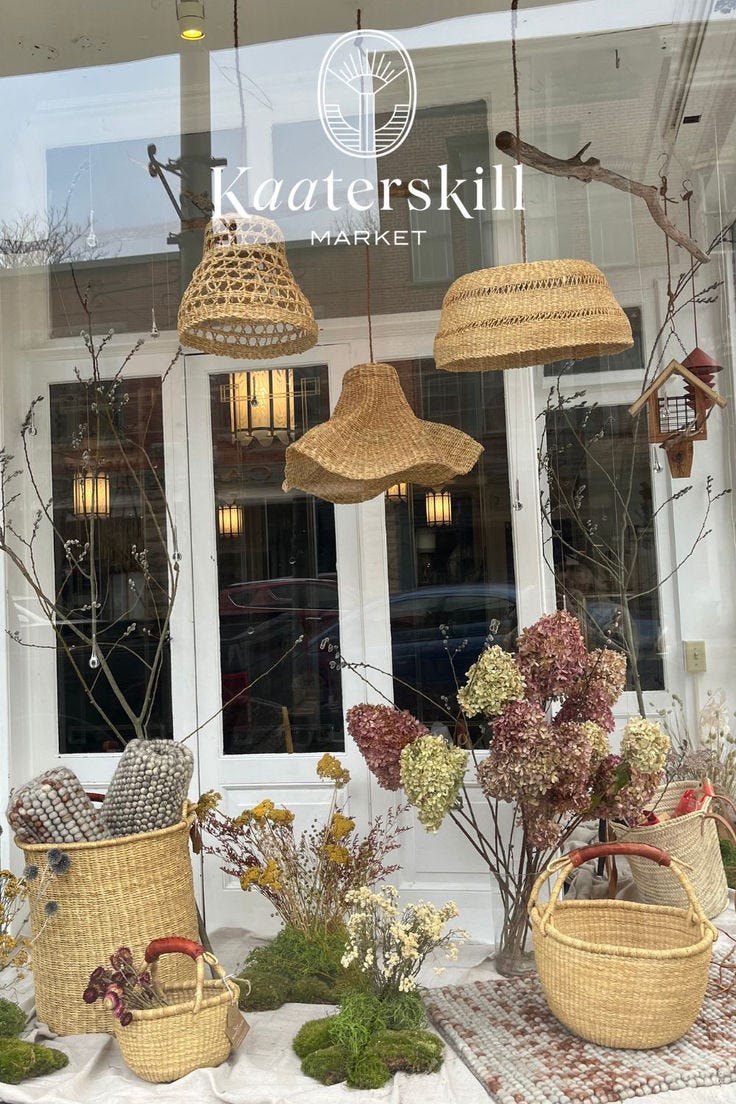
Every retailer has to develop a point of view. Ours runs through a few consistent filters:
Local first. If there’s a New York maker whose ingredients, packaging, and branding align with our standards, we choose them over a California or European brand. There are exceptions: natural deodorant that actually works and comes plastic-free is hard to find locally, same with plastic-free natural sunscreen, but local is the default.
Sustainable packaging. We avoid plastic bottles. There are recyclable choices that feel better, look better, perform better. We choose glass, aluminum and paper packaged products over plastic. Beyond sustainability there’s a tactile sensation to those materials that synthetic packaging doesn’t replicate.
Ingredients that we can stand behind. Natural, organic, recognizable, appropriate for sensitive skin and people paying attention to what they’re absorbing.
Community
Our customers are people who are paying attention to what they put on their skin, to how they spend their time, to the kind of world they’re quietly building through small daily choices. They’re not looking for the most popular product. They’re looking for the right one. We feel lucky to be the shop that helps them find it.
I can’t wait to get the new MĒNOS products on our shelves and introduce our community to the thoughtfully crafted skincare Sarah has been formulating for those seeking to heal their skin.